
Are the Dolomites Really Expensive? What a Hiking Holiday Actually Costs

The Dolomites have a reputation for being expensive. Cortina d’Ampezzo, beautiful mountain hotels, cable cars, busy restaurants and some of Italy’s most famous scenery can certainly make a Dolomites holiday look like a luxury trip.
But are the Dolomites really that expensive?
The answer is: they can be — but they don’t have to be.
Especially if your main reason for coming is hiking, the Dolomites can offer surprisingly good value. Once you leave the valley hotels behind and start walking from rifugio to rifugio, the way you spend money changes completely.
First: there isn’t one “Dolomites price”
A week in a four-star hotel in Cortina during August is a very different holiday from six days hiking the Alta Via 1 and sleeping in mountain huts.
Where you stay, when you travel and how you move around have a much bigger impact on your budget than the fact that you are simply “in the Dolomites.”
And this is where hut-to-hut hiking becomes interesting.
You are not paying separately for a hotel, rental car, daily activities and elaborate dinners. On many multi-day hikes, your accommodation and meals are concentrated into one simple mountain-hut experience.
You spend most of your day doing something that costs nothing at all: walking through the mountains.

How much does a rifugio cost?
A rifugio is not necessarily the cheapest possible way to sleep in Italy, but it offers much more than just a bed.
Many huts offer half-board, meaning your overnight stay includes dinner and breakfast. Depending on the hut, you may sleep in a dormitory, shared room or private room.
Prices vary considerably according to location, room type and what is included, so there is no useful single price that applies to every rifugio.
It is also worth remembering where you are staying. Food, drinks, bedding and supplies often have to be transported high into the mountains, sometimes by cableway, off-road vehicle or helicopter.
You are paying for accommodation in places where building and operating a hotel would simply not be possible. However, the biggest issue when reserving mountain huts is usually not the price, but availability. That's where Selfguided Dolomites can be helpful to secure your spots.
If you're curious about what staying in these huts is actually like, our guide to hut-to-hut hiking in the Dolomites is a good place to explore more.
What about food?
This is another area where expectations matter.
You can spend quite a lot if every hiking day includes several restaurant stops, aperitivo, wine and multiple courses. But you certainly don't need to.
When staying half-board in a rifugio, breakfast and dinner are generally already taken care of. During the day, many hikers stop for a simple lunch, soup, sandwich, plate of pasta or — inevitably — a slice of apple strudel.
And food is part of the experience.
Canederli in South Tyrol, casunziei around Cortina, polenta further south, local cheeses, Kaiserschmarrn and strudel all tell you something about the area you're walking through.
We wrote an entire guide about it here: What to Eat in the Dolomites: A Guide to Mountain Food for Hut-to-Hut Hikers.

The hidden expense: getting around
This is where costs can add up surprisingly quickly.
If you base yourself in one valley and try to visit a different famous location every day, you may need a rental car, parking, cable cars and sometimes additional buses or shuttles.
Hut-to-hut hiking works differently.
Your feet become your main form of transport.
You walk from one accommodation to the next, and your journey itself is the activity. Depending on the itinerary, you may still need buses, lifts or transfers at the beginning, end or during individual stages, but you are not commuting to a new attraction every morning.
That is one reason routes such as the Alta Via 1 work so well as a complete holiday rather than simply a series of day hikes. Our Alta Via 1 planner explains how the route works and the different ways you can experience it.
Cable cars: convenient, but not always necessary
Cable cars are fantastic — and sometimes they make an itinerary much more enjoyable.
But if you take several lifts every day, the costs soon become noticeable.
The good news is that hiking in the Dolomites does not automatically mean buying a lift ticket every morning. Many of our hut-to-hut routes use lifts selectively or not at all on certain stages.
Sometimes walking up is simply part of the adventure.
Do you need a rental car?
Often, no.
This is one of the easiest places to save money.
Many trailheads and valleys can be reached by public transport, and a point-to-point hut-to-hut hike makes having a car particularly unnecessary: leaving a rental car parked for five days while you walk across the mountains rarely makes financial sense.
Depending on your itinerary, a combination of trains, buses and one carefully planned transfer can be much more practical.

What about hiking equipment?
If you already hike regularly, you probably own most of what you need.
You don't need expedition equipment for a normal Dolomites hut-to-hut hike. Good footwear, layers, waterproof clothing, a suitable backpack and a few mountain essentials cover most of it.
And because you sleep and eat in rifugios, there is no need to carry a tent, camping stove, sleeping bag and several days of food.
Our Dolomites hut-to-hut packing guide explains what you actually need — and, perhaps more importantly, what you can leave at home.
July and August usually cost more
Timing makes a big difference.
July and August are the busiest hiking months, and accommodation in the valleys is in high demand. If you want to stay in Cortina, Ortisei or another popular resort before and after your trek, booking late can make your trip considerably more expensive.
June and September can sometimes offer better value in the valleys, although mountain conditions and hut opening dates need to be considered.
And don't assume you can simply wait for a last-minute deal on the huts. Popular routes have the opposite problem: availability disappears.
Our article How Far in Advance Should You Book a Hut-to-Hut Hike in the Dolomites? explains why the most popular rifugios can fill far ahead of the hiking season.
Alta Via 1 isn't your only option
Another way to control the cost of your holiday is to choose the right itinerary.
You don't necessarily need a ten-day crossing of the Dolomites.
A shorter route can still give you the full hut-to-hut experience while reducing the number of accommodation nights and overall travel costs.
The Alta Via 1 North, for example, concentrates many of the landscapes people associate with the classic Alta Via into a shorter journey. The Dolorama Trail offers a different experience through broad South Tyrolean mountain landscapes, while routes around the Rosengarten and Alpe di Siusi explore another completely different corner of the Dolomites.
You can compare these and our other routes on the Self Guided Dolomites tours.
So, are the Dolomites expensive compared with a normal holiday?
They certainly can be.
Stay in high-end hotels, rent a car, use cable cars every day, eat in restaurants for every meal and travel in peak season, and the budget can climb very quickly.
But that isn't the only way to experience these mountains.
A hut-to-hut holiday is quite different. Your accommodation is simple, much of your food can be included, your entertainment is the landscape around you, and your primary means of transportation is a pair of hiking boots.
There will still be extras — drinks, lunches, transport, lifts, showers in some huts and perhaps the obligatory afternoon strudel — but the experience doesn't require luxury spending.
Is a self-guided tour more expensive than organising everything yourself?
Yes. If your only goal is to spend as little as possible, arranging every hut, route, transfer and detail independently will usually cost less than booking an organised self-guided package.
What you're paying for with a self-guided tour is not simply the beds.
At Self Guided Dolomites, we coordinate the rifugio reservations, design the itinerary, prepare your route information and GPX navigation, provide your digital guidebook and help you prepare for the hike. Our tours also include a pre-hike consultation, so you know what to expect before arriving in the mountains.
For many hikers — particularly those travelling internationally — the value is having the complicated part organised while still experiencing the mountains independently.
Where we think the Dolomites offer the best value
It isn't necessarily about finding the cheapest bed or saving €5 on lunch.
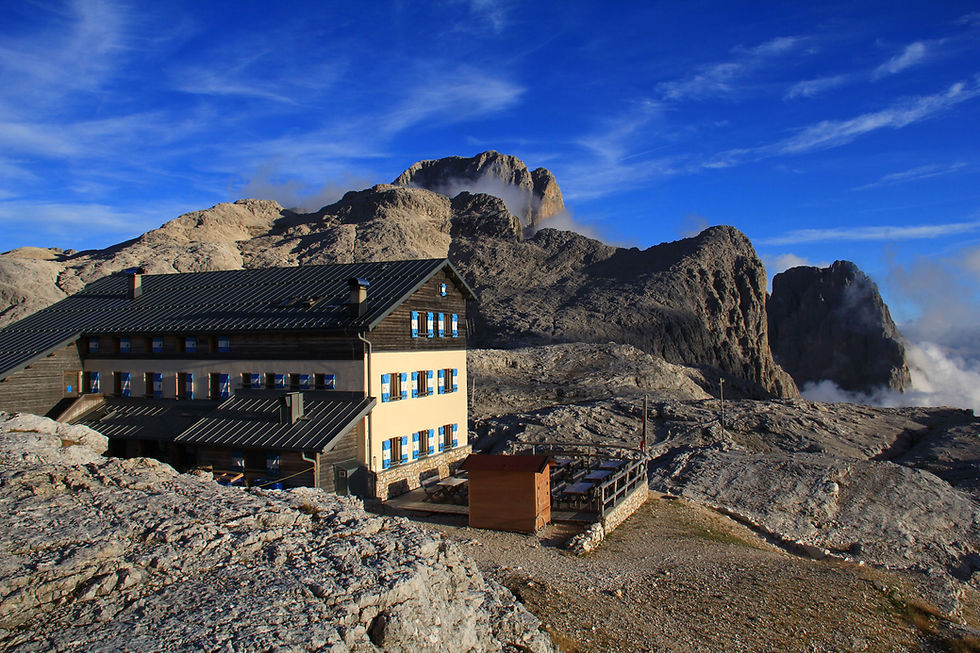
It's waking up at 2,000 metres, stepping outside the rifugio and already being on the trail.
It's walking all day without buying a ticket to an attraction.
It's stopping for an espresso because you feel like it, eating dinner with people you've met along the trail and watching the mountains turn pink outside the hut.
Then you wake up and do it all again somewhere new.
The Dolomites aren't a cheap destination. But they don't need to be a luxury destination either.
Plan carefully, choose the right route, travel light and spend your money on the parts of the experience that matter to you.
And maybe keep a few euros aside for strudel.


Comments